




Many industrial project buyers face a key dilemma when selecting lifting equipment: how do you choose between a gantry crane and an overhead crane?
This article breaks down the core differences between the two cranes from five aspects: structural design, application scenarios, environmental adaptability, cost and maintenance, and selection guidelines. It will help you choose the most cost-effective lifting solution based on your project’s actual needs.
1. Core Structural Differences: The Leg Design Is the Most Obvious Distinction
The biggest difference between an overhead crane and a gantry crane lies in their support method and installation carrier — the root of all other differences.
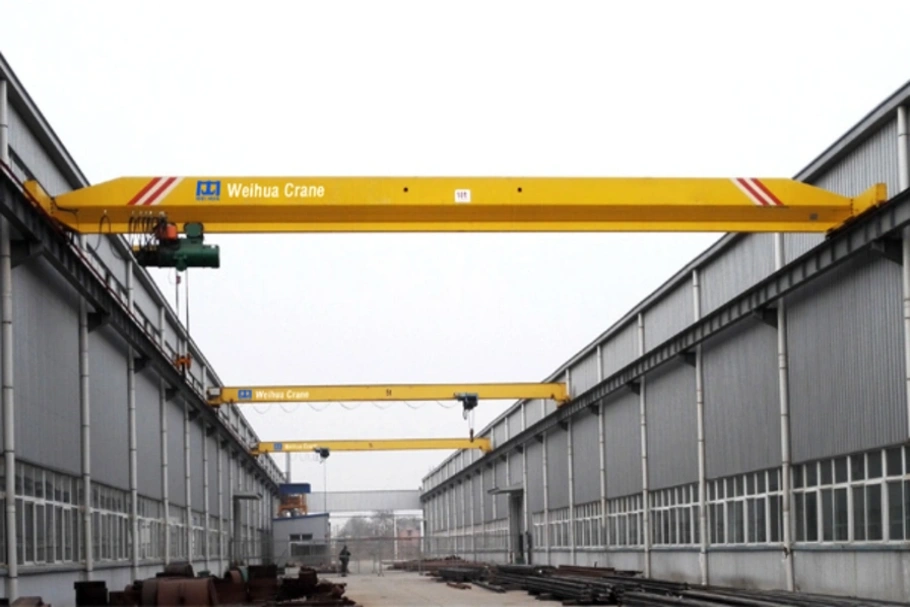
Overhead Crane
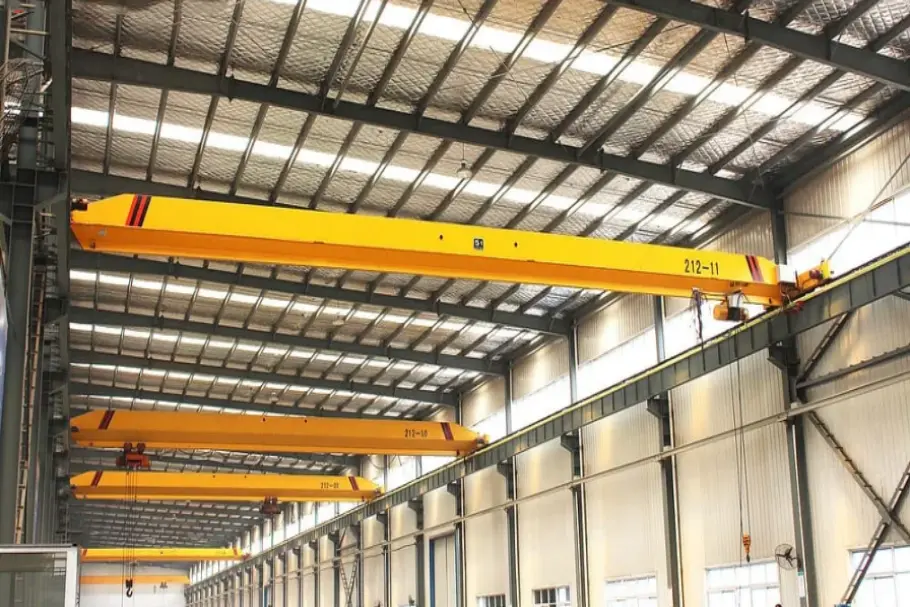
An overhead crane is a building-dependent piece of equipment with no ground legs. Its main beam spans across the overhead load-bearing beams and column rails on both sides of the factory, suspended entirely in the air. It relies on the factory’s steel structure or concrete columns to bear the full load. The crane travels back and forth on fixed overhead rails, occupying no ground space at all, making it a dedicated indoor lifting device.
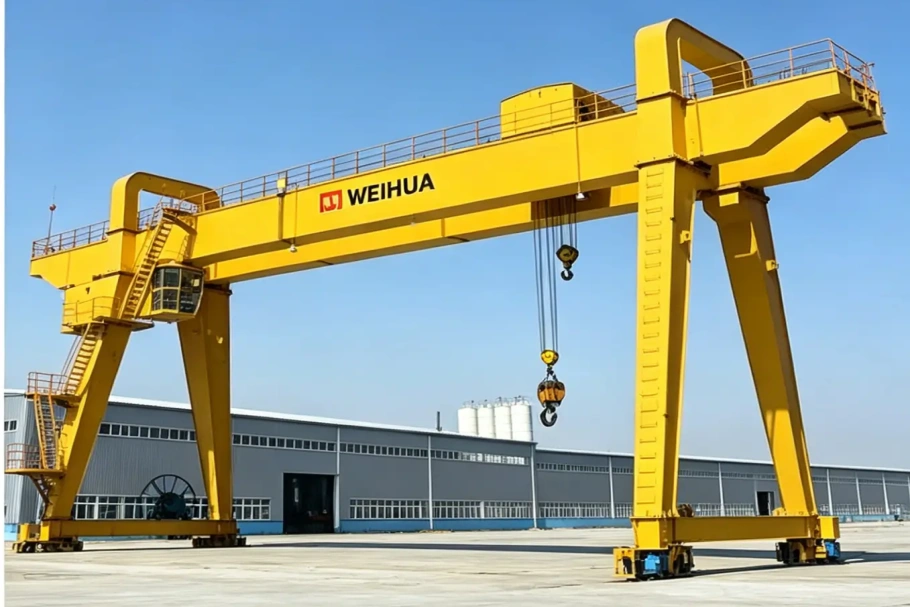
Gantry Crane
A gantry crane can be seen as a modified version of the overhead crane. It has two vertical steel legs that form a stable gantry frame. The entire machine stands on its legs and runs on ground-mounted rails. It does not rely on the factory building and can operate independently, free from structural limitations, offering greater flexibility.
2. Application Scenarios: Indoor Precision Work vs. Outdoor Large-Scale Operations
These structural differences directly determine the core use cases of each crane, which is the key basis for purchasing decisions.
| Item | Overhead Crane | Gantry Crane |
|---|---|---|
| Core Application | High-frequency, precision indoor lifting | Heavy-duty, large-span outdoor lifting |
| Main Working Areas | Enclosed factories, workshops, warehouses, assembly lines | Outdoor stockyards, ports, construction sites, shipyards, water conservancy projects |
| Space Utilization | Makes full use of vertical space; ground area stays unobstructed | Covers a wide working range with larger operating spans |
| Typical Operations | Material handling, equipment assembly, mold lifting, semi-finished product transfer | Bulk cargo loading & unloading, hoisting large components, ship section transportation, heavy material moving |
| Adaptable Models | Designed exclusively for indoor enclosed spaces | Full-gantry & semi-gantry types available, fit for factory entrances and semi-open workshops |
| Overall Versatility | Limited to indoor environments | Strong flexibility, suitable for diverse working locations |
3. Environmental Adaptability: Controlled Indoor vs. Weather-Resistant Outdoor Use
The two cranes differ significantly in their ability to handle complex and outdoor conditions — a key concern for overseas project buyers.
| Comparison Item | Overhead Crane | Gantry Crane |
|---|---|---|
| Designed Environment | Stable indoor working conditions | Complex outdoor working conditions |
| Standard Protection | Basic dustproof function | Integrated protection against rain, dust, wind and corrosion |
| Resistance to Harsh Factors | Not resistant to wind, sand, salt spray and extreme temperatures | Works steadily under rain, sand, extreme temperatures and high humidity |
| Customized Options | No special outdoor configurations | Anti-salt spray coating for coastal areas; rail clamps & wind anchors for windy sites |
| Outdoor Service Life | Prone to rust, motor dampness and early component damage if used outdoors | High durability for long-term outdoor operation |
4. Cost and Maintenance: Budget and Long-Term Upkeep Differences
Many buyers only look at the unit price, ignoring the total cost of installation, infrastructure, and maintenance — a critical factor where the two cranes differ greatly.
| Comparison Item | Overhead Crane | Gantry Crane |
|---|---|---|
| Equipment Unit Price | Lower | Slightly higher due to more steel used |
| Structure & Installation | Simple structure, easy installation | Self-supporting frame structure |
| Infrastructure Cost | Higher, requires factory overhead beams and rails | Lower, no building renovation required |
| Component Supply | Standard parts, easy to source | General accessories available |
| Failure Rate | Very low | Stable performance |
| Daily Maintenance | Low maintenance frequency | Regular anti-corrosion & wind-proof upkeep needed |
| Mobility | Fixed installation, hard to move | Relocatable and reusable |
| Long-term Cost Performance | Cost-effective for long-term fixed indoor use | Ideal for flexible and temporary working sites |
5. Quick Selection Guide: 10 Seconds to Choose the Right Crane
Based on years of experience with foreign trade projects, here’s a simple selection standard suitable for most domestic and international industrial projects:
Choose an overhead crane if you have:
A standard enclosed factory, mainly indoor assembly line work, a focus on precision and stability, long-term fixed-site production, and a budget focused on low long-term maintenance costs.
Choose a gantry crane if you have:
No dedicated factory building, operations in outdoor yards/ports/construction sites, need for large-span, wide-coverage lifting, flexible site use, or work in harsh outdoor conditions.
Conclusion
In short, the overhead crane is the first choice for precision indoor lifting, while the gantry crane is essential for heavy-duty outdoor operations. Neither is inherently better — the key is whether it matches your specific project conditions.
If you are unsure which model suits your site and working conditions, feel free to contact us. With years of experience in crane customization and export, we can provide a one-on-one, free consultation to design the optimal lifting solution based on your environment, tonnage, span, and usage frequency, eliminating costly mismatches and ensuring stable, efficient equipment operation.



